The language of bark
How a winter project to learn to identify trees by their bark alone changed every walk since.

Last winter I made a small private project. I would learn to identify the eight most common trees on my regular forest walks by their bark alone — without leaves, without buds, without seeds. Just the bark. The project sounded easy. It was not.
Bark is the thing about a tree that we look at least. We look at leaves in summer. We look at flowers in spring. We look at the overall shape of the tree at any time. The bark is the surface we walk past. To make it the only diagnostic feature is to retrain the eye in a way that I had not anticipated.
The eight
Oak, with its deeply furrowed grey-brown bark in vertical ridges. Beech, with its famously smooth silver-grey bark that you can stroke and that often has carved initials a hundred years old. Hornbeam, which I had confused with beech for years and which has fluted, muscular-looking bark — bark that looks like a tense forearm. Lime, with its smooth bark in young trees and lightly ridged in older ones, and the characteristic small dark patches that suggest age. Maple, with grey bark that fissures into long flat plates. Chestnut, with bark that spirals up the trunk in a noticeable twist. Ash, with diamond-patterned bark when mature. And the elm, when you find one, with its long vertical fissures and warm grey colour.
What I got wrong
Beech and hornbeam, repeatedly. They are both smooth-barked. The difference is that hornbeam has the muscular, fluted look — the trunk almost seems to ripple — while beech is smooth in a more uniform, plain way. Once you have seen the difference you cannot unsee it, but it took me about a month of walks to see it the first time.
Oak and chestnut, occasionally, on younger trees. The chestnut spiral is the giveaway but on young chestnuts the spiral is faint and the bark looks oak-like. By winter's end I had a small mental decision tree for this case (look at the leaf litter under the tree, look at the buds at eye height) but for the first few weeks I made mistakes.
What the project gave me
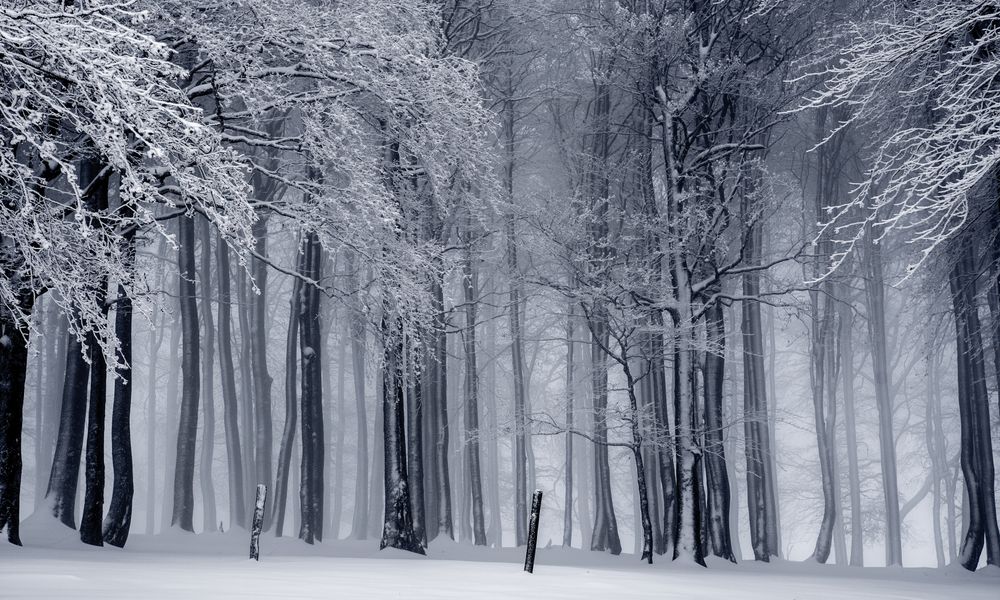
The forest in winter is a different forest now. Before, when the leaves were down, the forest read to me as a kind of grey blur of bare branches. The trees were generic. Now the trees are individuals. I walk into the grove and I see, immediately, oak, oak, beech, hornbeam, lime, the small ash near the path. The forest has names again, in the season when it used to lose them.
If you walk the same forest, give yourself a winter to do this. Eight trees. Bark only. By spring you will know your forest in a way that summer alone would not have taught you.